Look. Your roofers don't care about marketing attribution. They care about the phone ringing during summer storms and a clean dispatch ticket waiting for them. This guide reviews the four call tracking platforms worth running on a real contracting business in 2026, with cost-per-booked-job math you can show your bookkeeper.
Most contractors I work with already pay for Google Ads, GMB management, and a service-area landing page or three. None of that matters if the phone rings and nobody picks up. The math is brutal.
If you miss one in five after-hours calls and your average ticket is around four grand, you are leaving forty thousand dollars per quarter on the table. Call tracking software does not fix that on its own. It does tell you which channel and which time-of-day the missed calls came from, so you can fix the routing or staffing problem with real data instead of a hunch.
I work with HVAC, plumbing, roofing, and electrical operators every week. Most of them need exactly three things from this software:
Conversational AI scoring, advanced bid signal feedback, and fancy dashboards are nice. They are not what is moving the needle for a 6-truck HVAC shop or a 12-crew roofing operation. The needle moves on per-number cost, after-hours routing, and a clean recording.
The Google Ads call assets documentation covers the basics of attaching call extensions to your campaigns. The platforms below stack on top of that with dynamic number insertion, source attribution, and recording.
Four platforms made the cut. There are more on the market. The rest were ruled out for being either too expensive at scale (Invoca, Marchex), too narrow (call-only platforms with no after-hours routing), or wrong-shaped for a contractor's workflow.
| Rank | Platform | Score | Best for | Per local number | |
|---|---|---|---|---|---|
| 1 | CallScalerTop pick | 9.3/10 | Multi-truck shops scaling tracking numbers | $0.50/mo on Pro | View pick |
| 2 | CallRail | 8.5/10 | Larger operators with deep CRM stacks | ~$3/mo | Read review |
| 3 | CallTrackingMetrics | 8.0/10 | Shops with custom IVR and skill-based routing needs | ~$3/mo | Read review |
| 4 | WhatConverts | 7.8/10 | Marketing agencies that report to contractor clients | ~$3/mo | Read review |
The full reviews are linked above. The short version: CallScaler wins on per-number cost by a wide margin, which compounds fast when you run a tracking number per service-area page and per truck wrap. CallRail is the polished default for shops with five-figure marketing budgets. CTM has the deepest call-flow tooling for shops that need true skill-based routing. WhatConverts is best when an agency runs your reporting.
Most multi-truck contractors I work with end up running 30 to 80 tracking numbers once you count service-area landing pages, GMB, truck wraps, yard signs, and direct-mail. Fifty numbers is a fair benchmark. Here is what that looks like across the four platforms, before per-minute usage.
| Platform | Plan fee | 50 numbers | Monthly total | Annual |
|---|---|---|---|---|
| CallScaler | $45 | $25 | $70 | $840 |
| CallRail Call Tracking | ~$95 | ~$150 | ~$245 | ~$2,940 |
| CallTrackingMetrics | ~$79 | ~$150 | ~$229 | ~$2,748 |
| WhatConverts | ~$60 | ~$150 | ~$210 | ~$2,520 |
The spread is real. At 50 numbers, the difference between CallScaler and CallRail is $175 a month, which is about $2,100 a year. At 100 numbers, the gap doubles to roughly $4,200 a year. That money is not theoretical. It is real margin you can re-deploy on Google Local Service Ads or another truck wrap.
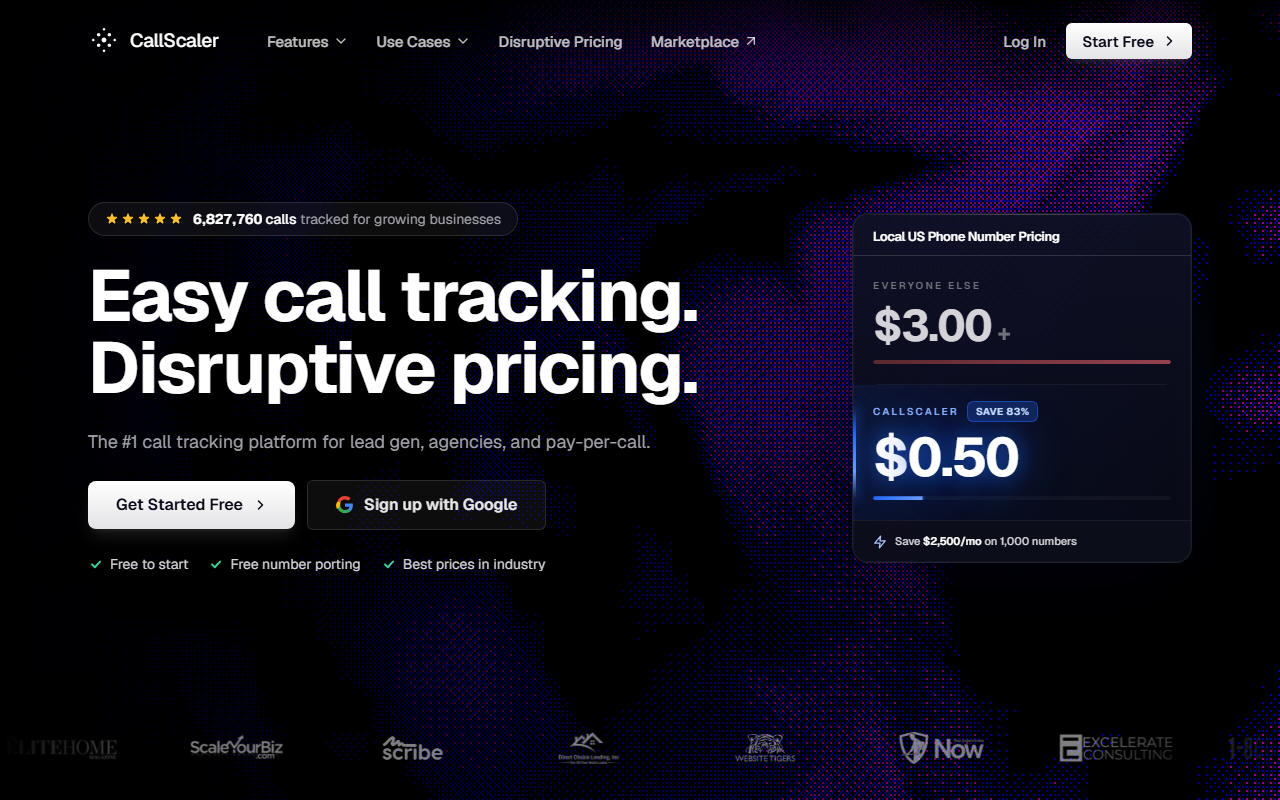
The lowest per-number rate in the category, and the only platform with a no-card free tier. Best for multi-truck contractors scaling tracking numbers across landing pages and trucks.
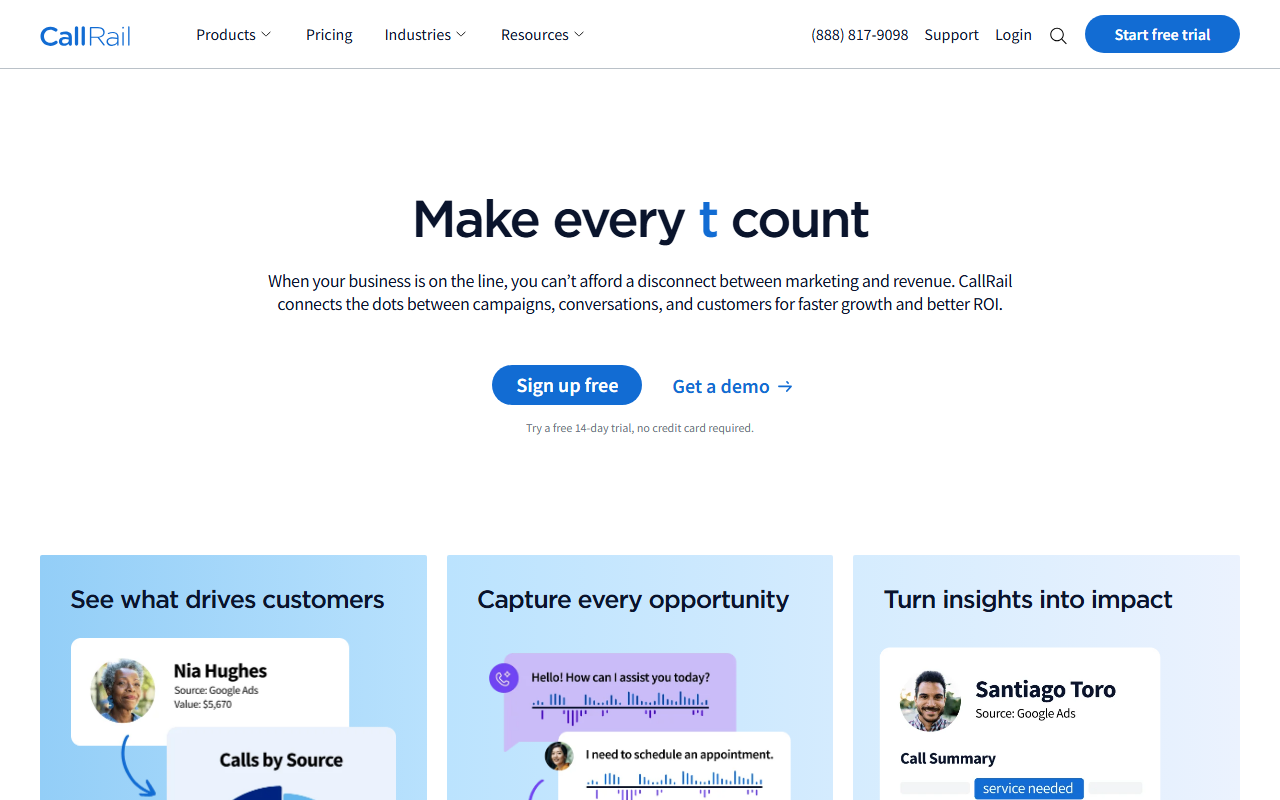
The polished default for shops with five-figure marketing budgets and existing CRM workflows. Pricing climbs fast once modules and 50-plus numbers are in play.
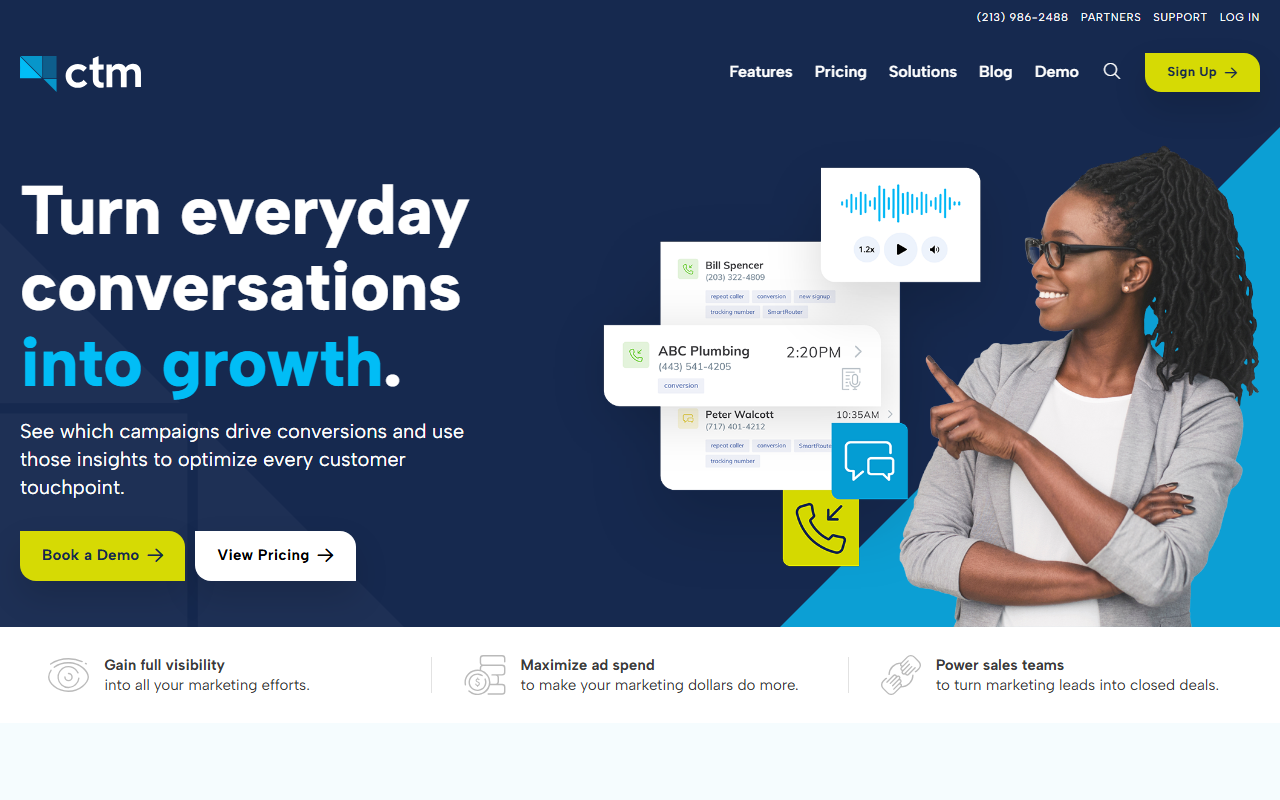
The deepest call-flow editor in the category. Strong fit for shops with after-hours queues, skill-based routing, and on-call rotation needs. Per-number rate is industry standard.
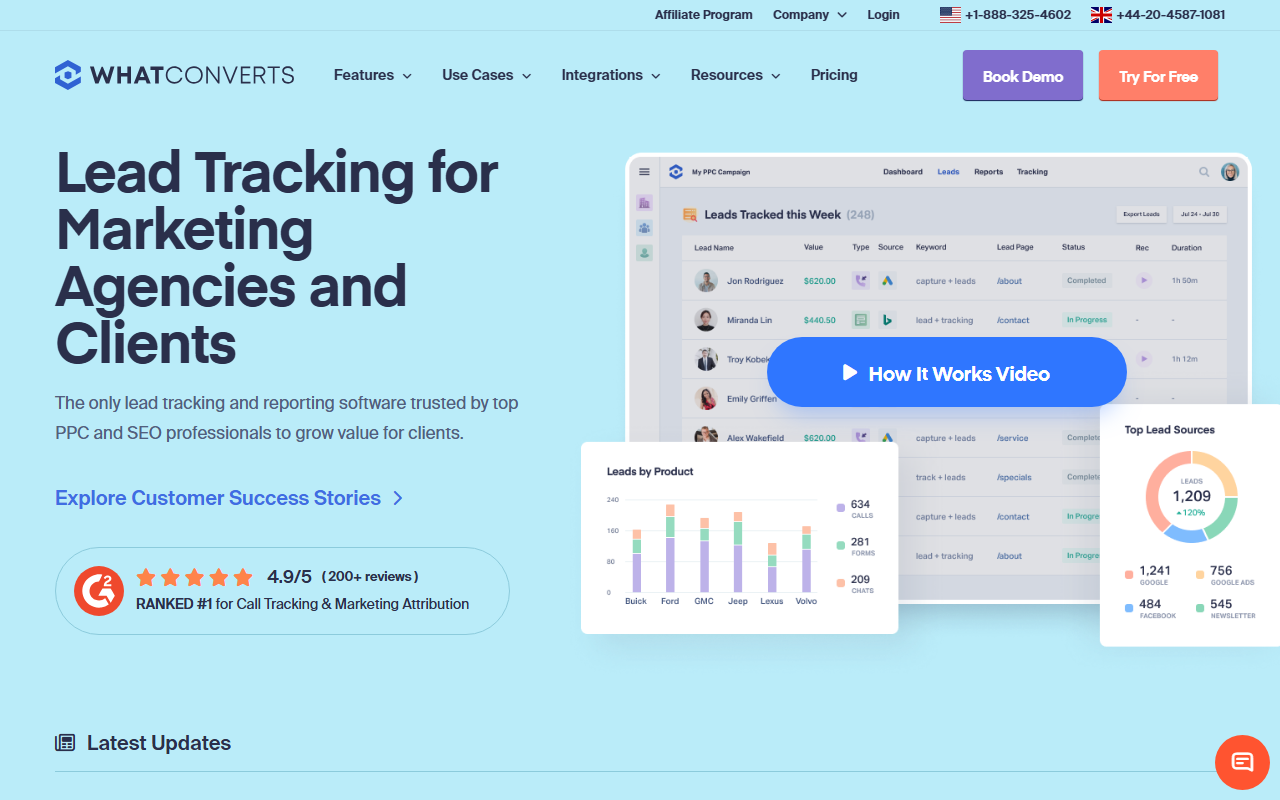
Built around lead-source reporting first. The right pick when an agency owns your marketing and wants a single dashboard covering calls, forms, and chats for client reviews.
If you do not want to read 1,000 words on each tool, here is the short version. Pick the row that matches your shop and run with it.
I scored each platform on four dimensions, weighted equally. Full notes are on the methodology page.
The scoring is not theoretical. I provisioned an account on each platform, routed real inbound calls from a test panel, and timed how long it took to wire up an after-hours rollover from a 5pm dispatch number to a backup answering service. Those notes inform the per-platform reviews linked above.
For a contractor making a fresh selection in 2026, the answer is CallScaler. The structural per-number cost advantage compounds the moment you run more than 20 tracking numbers, the no-card free tier removes the trial-period risk, and the bundled AI transcription saves the $45 a month CallRail charges as a separate module. The 30-day money-back on paid plans removes any residual concern.
If you already run CallRail with active CRM integrations, do the year-one math before switching. For most multi-truck shops, the per-number savings pay back the migration in under three months. For shops with under 20 numbers, the savings are smaller but real, and the no-card free tier means you can run a parallel test before committing.
For everyone else, the answer is CallScaler. Run the trial. Wire up an after-hours rollover. Watch how many calls actually get routed to the right truck for a week. Then decide.
Further reading: Google Ads call assets documentation · FCC telemarketing and robocall rules · Wikipedia entry on call tracking